INDIAHIKES
My understanding of the brief
To propose solutions to bring out essence and values of brand and context across Indiahikes community campuses basecamps in the Himalayas.
Design: how basecamp will look
Community: building connections among trekkers
Overall experience: activities offered at basecamps by organization
BRAND RESEARCH
Over 16 years ago, Indiahikes founders, Arjun Majumdar and Sandhya UC, started Indiahikes with one simple belief — Everyone Must Trek. They wanted to do this by bringing out information about treks, and by setting the right spirit of trekking in India.
Today, they are India’s Largest Trekking Community, with over 35,000 trekkers joining the Indiahikes Experience every year.
VALUES

Transformative Trekking
Indiahikes focuses on conciously transforming life as changing the trekkers mind, body and soul and make them feel connected with nature.
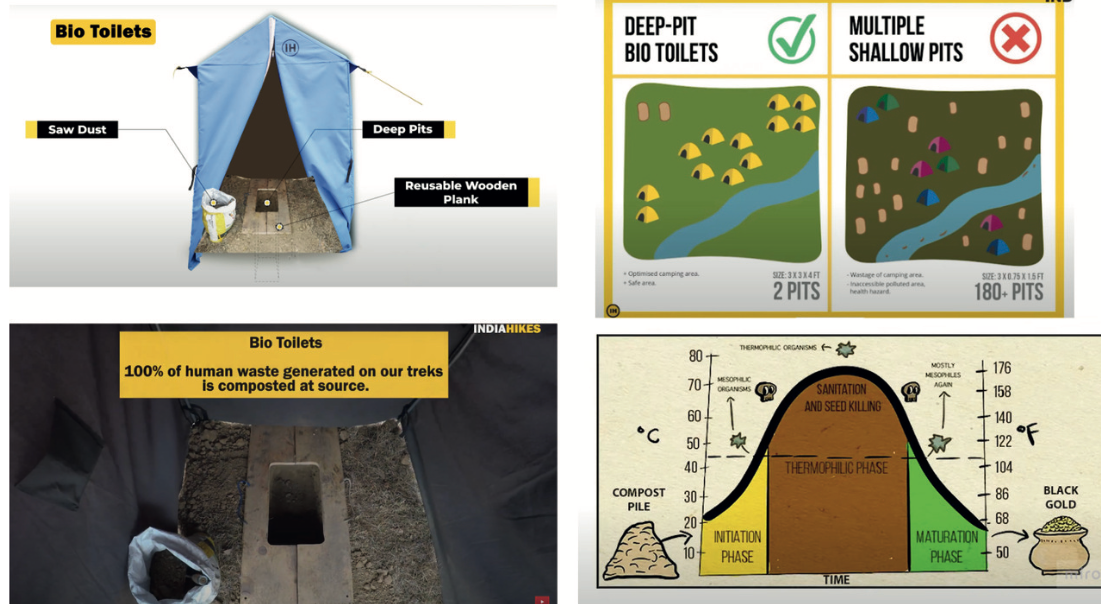
Sustainability
They are committed to minimizing their environmental impact through one of their practice 'Green Trails' which is their key component.
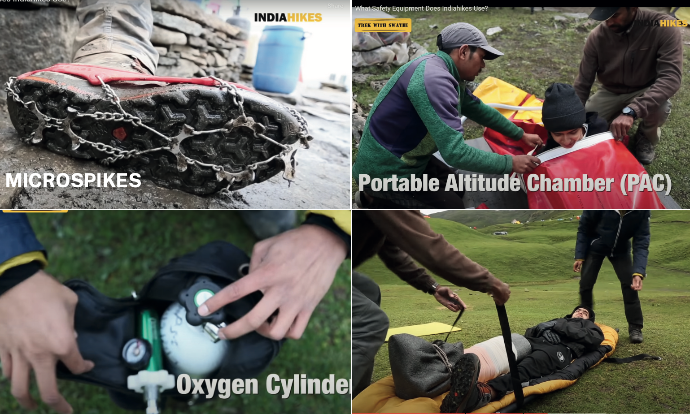
Safety
Safest organisation in India, providing innovative techniques and advanced equipments to the trekkers.

VISION
Accessibility:
They want to make trekking accessible for everyone which also includes children and senior citizens. "Everyone must trek"
Raithal
Raithal Village is perched at an elevation of 1,800 meters, in the Uttarkashi district of Uttarakhand.
It is about 38 kms from main Uttarkashi city. Village is well connected by motorable road.
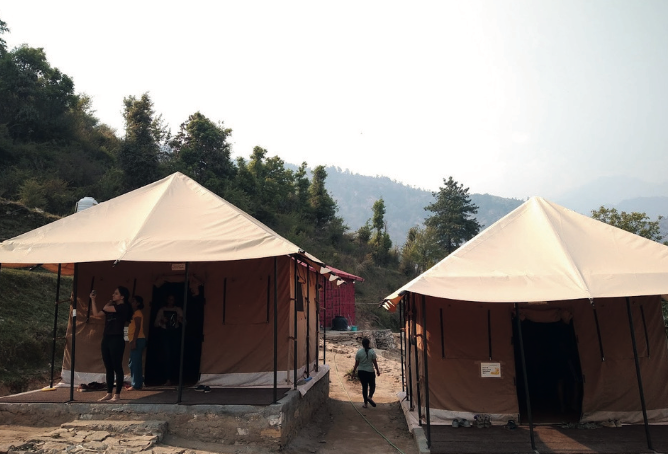
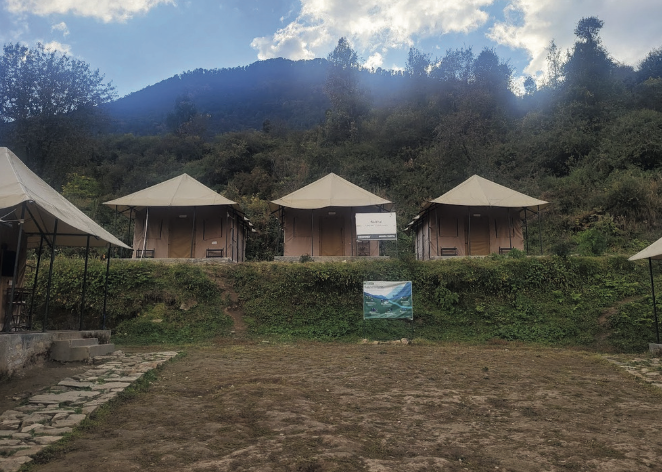
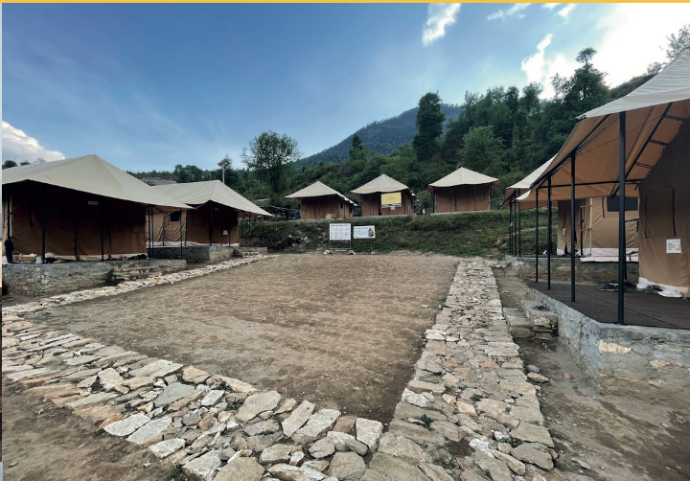
It is Indiahikes basecamp. It's the place from where trek to Dayara Bugyal starts. We did our primary research there, and spent 2 days - analysing the problems and understanding the needs of trekkers as well as people working there.


CONCEPT
Proposing a strategy by introducing bird sounds and calls of local birds from Dayara Bugyal Trek region into Indiahikes Basecamp.
This auditory experience aims to make trekkers more mindful of their surroundings and foster a deep connection with nature before they set foot on the trail.
In addition to this I want to install information panels which will help trekkers to know about the birds which they don't know and their sounds and calls pattern which will be played in a way that it will remind trekkers of daily activities like the breakfast time or meeting time so on.
Why birds ?
3. Access to agricultural land, which helps provide birds with food, especially during winters.
Similarities between birding and trekking
How Indiahikes resonates with spirit of birding?
Most trek routes pass through minimal or no population or any other disturbances. As a result, bird species thrive in those regions due to abundant food, natural forests, and no threats or disturbances from humans - Trekker from Indiahikes.
Thoughts of trekkers
Birdwatching is an activity that is very personal and ephemeral. There is only you and nature.

Vector images of birds

Himalayan Griffon Vulture near the activity area and briefing hall, symbolizing vigilance and preparedness
Cheer Pheasant near the tents, providing trekkers with a sense of tranquility and connection to nature.
Information panel layout
Area of intervention